
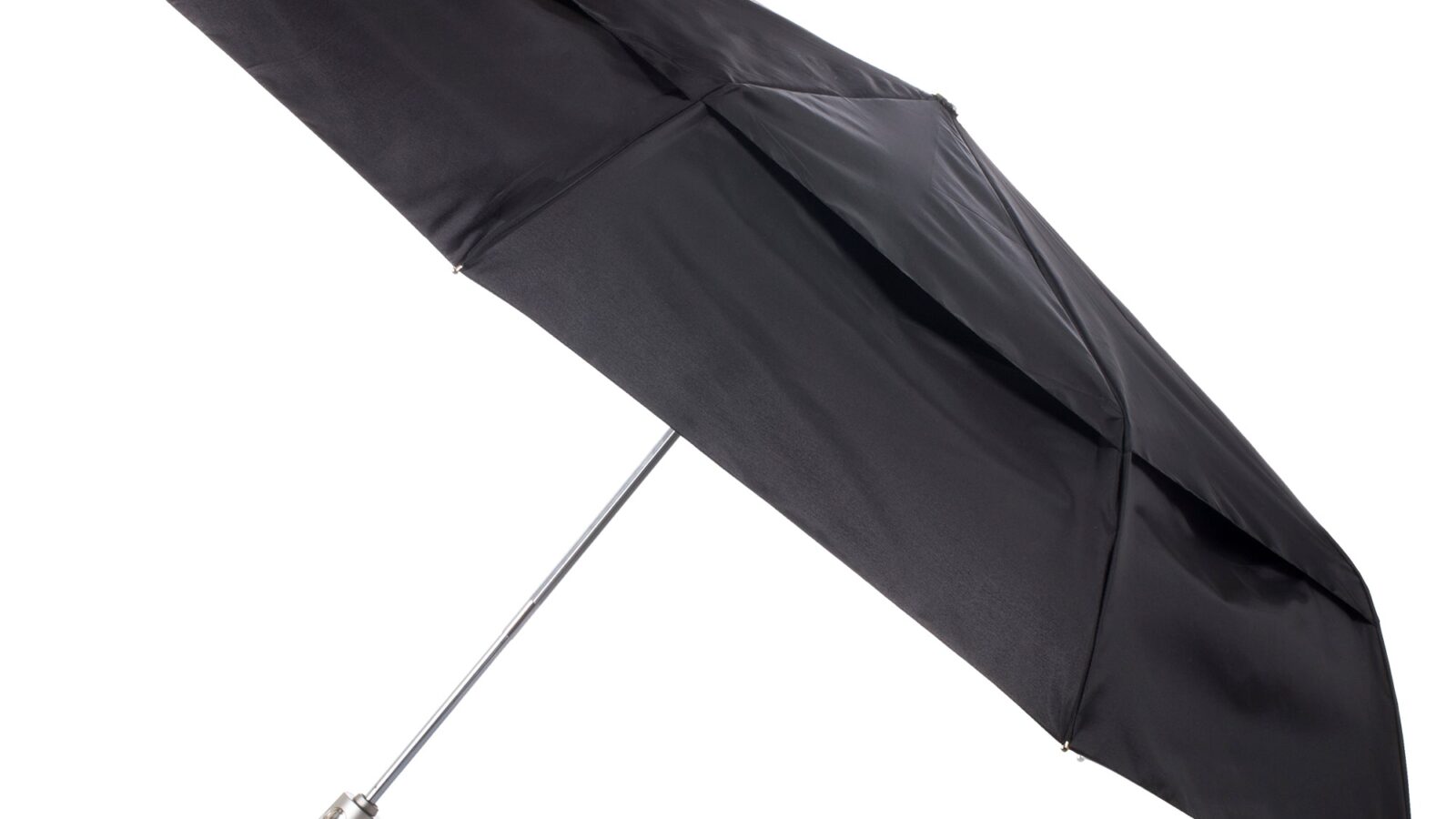
A storm rarely announces itself before it bends a cheap umbrella frame in half. Windproof umbrellas built with reinforced ribs and vented panels behave very differently than the bargain folding kind sold at corner stores. Totes builds its rainwear and umbrella range with that gap in mind, favoring functional durability over passing design trends.
Understanding Windproof Technology in Totes Umbrellas
Wind resistance in an umbrella generally comes down to two things: how rigid the frame stays under pressure, and whether the canopy lets gusts pass through rather than catching them like a sail. A vented panel gives wind an escape route instead of forcing the whole canopy to flip inside out. That is the basic physics behind why vented, reinforced designs tend to hold their shape longer than a flat, solid canopy in open wind.
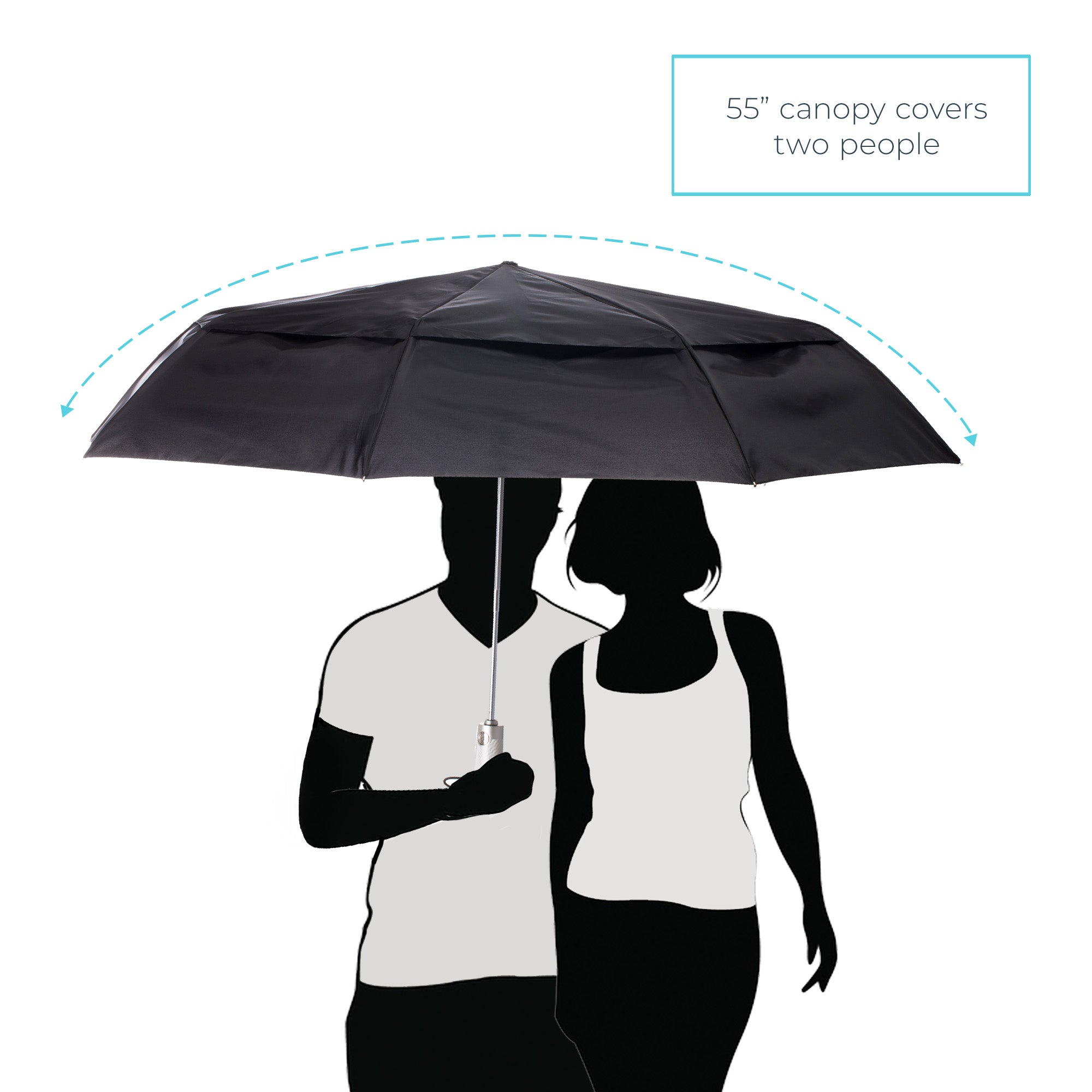
Totes applies that reinforced approach across several models rather than reserving it for a single flagship piece. The Folding Golf Umbrella with Wind & Sun Protection, for example, is built to perform in harsh conditions and carries a wind rating of up to 75MPH, paired with a 55-inch arc that covers more than one person. Because that rating shows up on more than one umbrella, buyers are not forced to choose a single storm-ready option from a short list.
Titan® Technology: The Core of Totes’ Storm-Ready Designs
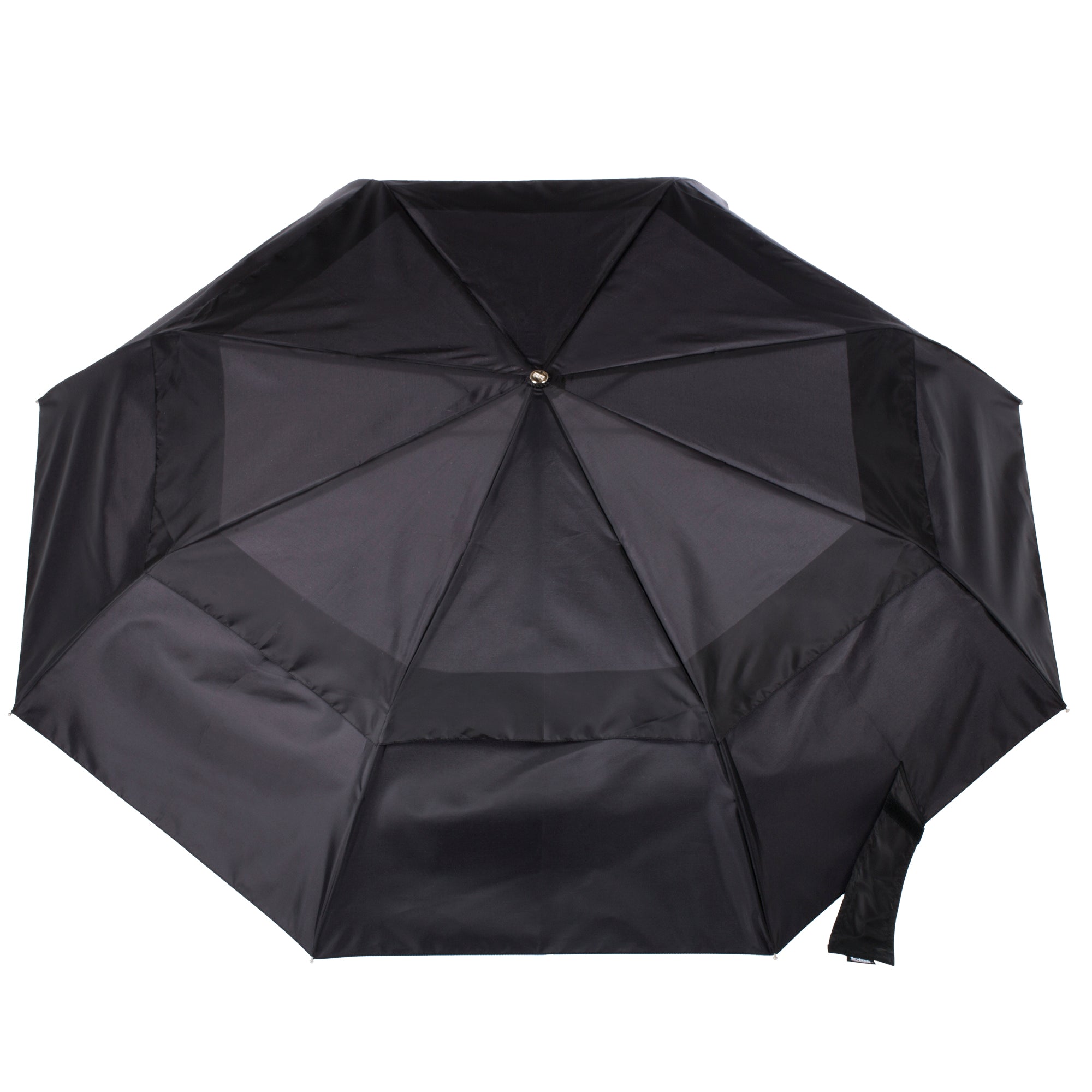
Several Totes umbrellas carry Titan® windproof technology, a design feature the brand highlights across both its stick and folding lines. The Ultimate Protection Folding Umbrella with Wind & Sun Protection pairs this technology with a reinforced vented canopy and stands strong in winds up to 75 mph. A similar wind rating appears on the Stick Reverse-Close Umbrella with Under-Canopy Print, which keeps its reverse-close mechanism intact under that same strain.
The Vented Golf Stick Umbrella with Wind & Sun Protection applies the same approach to a larger 60-inch vented canopy, spacious enough for two people, built on a lightweight non-metal frame. Since the wind rating stays consistent across these different shapes and sizes, comparing models becomes a question of format and coverage rather than one of storm resistance.
Compact Folding Umbrellas vs. Full-Size Stick Models
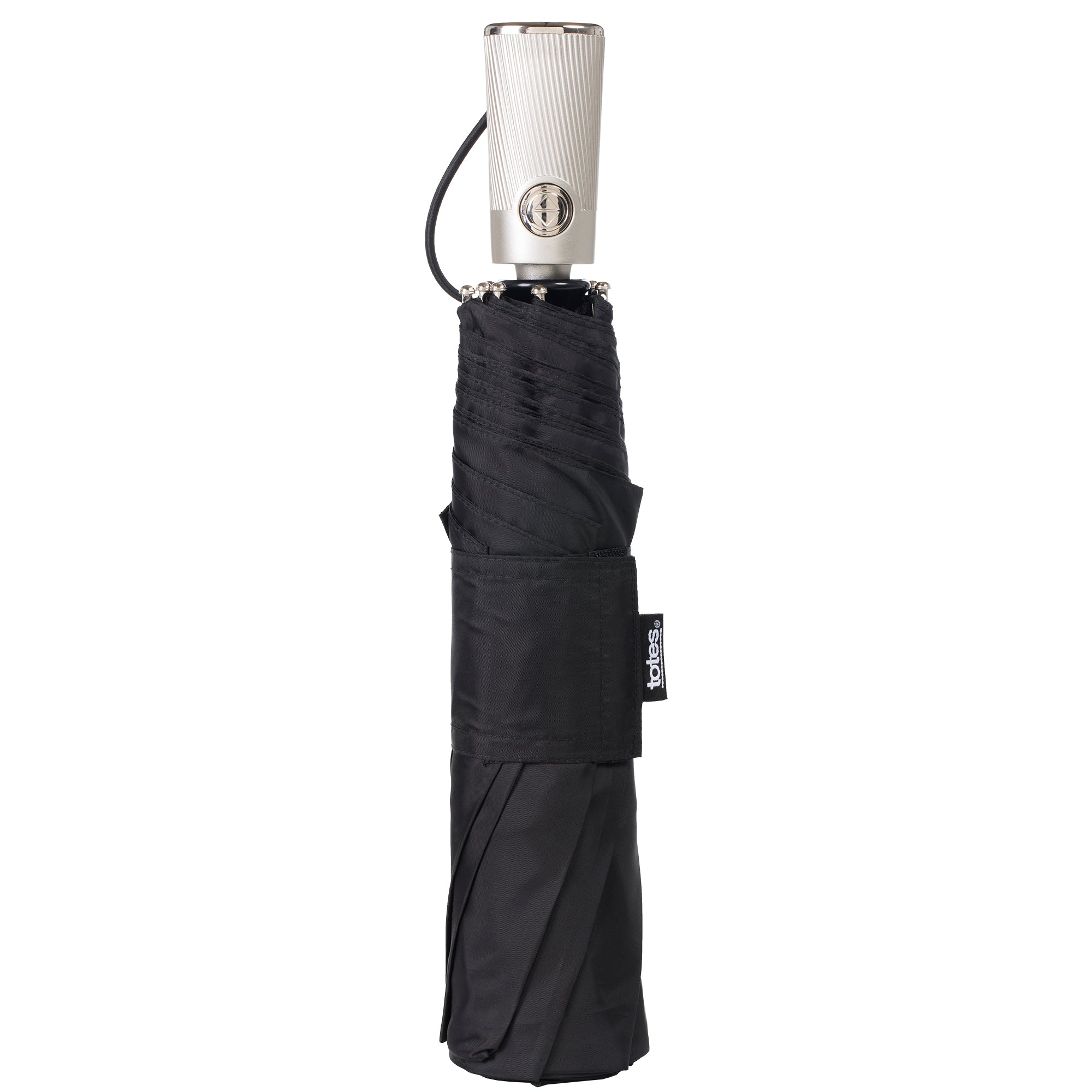
Totes splits its umbrella catalog into folding designs built for portability and full-size stick umbrellas built for broader coverage. The Mini Folding Umbrella with Auto Open/Close Technology is sized for a bag or purse and ships with a storage sleeve for when the canopy is still wet. By contrast, the Classic Solid Wood Stick Umbrella uses a solid wood stick and a crook handle, paired with water-repellent technology, for a more traditional silhouette.
The Folding Reverse-Close Umbrella with Wind Protection sits between those two approaches, folding down for a commute while its inside-out fold keeps water contained so clothes, car interiors, and bags stay dry. This structural variety means the real choice is between portability and format, not between different levels of storm resistance, since windproof umbrellas appear in both folding and stick versions throughout the lineup.
Rain Boots and Complementary Weather Gear
Umbrellas are only one piece of what Totes offers for wet-weather days. The brand’s boot lineup includes the Women’s Chelsea Ankle Rain Boots and Men’s Chelsea Ankle Rain Boots, both described as versatile enough for everyday wear beyond rainy days. A Kid’s Charley Tall Rain Boot extends that same everyday-use idea to children’s sizing.
Beyond boots, the catalog also lists rain jackets, sandals, and sun hats with UPF 50 protection, such as the Sun Hat with Flap and the Packable Sun Hat. These pieces are not windproof umbrellas, but they round out a weather-focused range that spans both rain and sun conditions.
Real-World Performance in Severe Weather Conditions
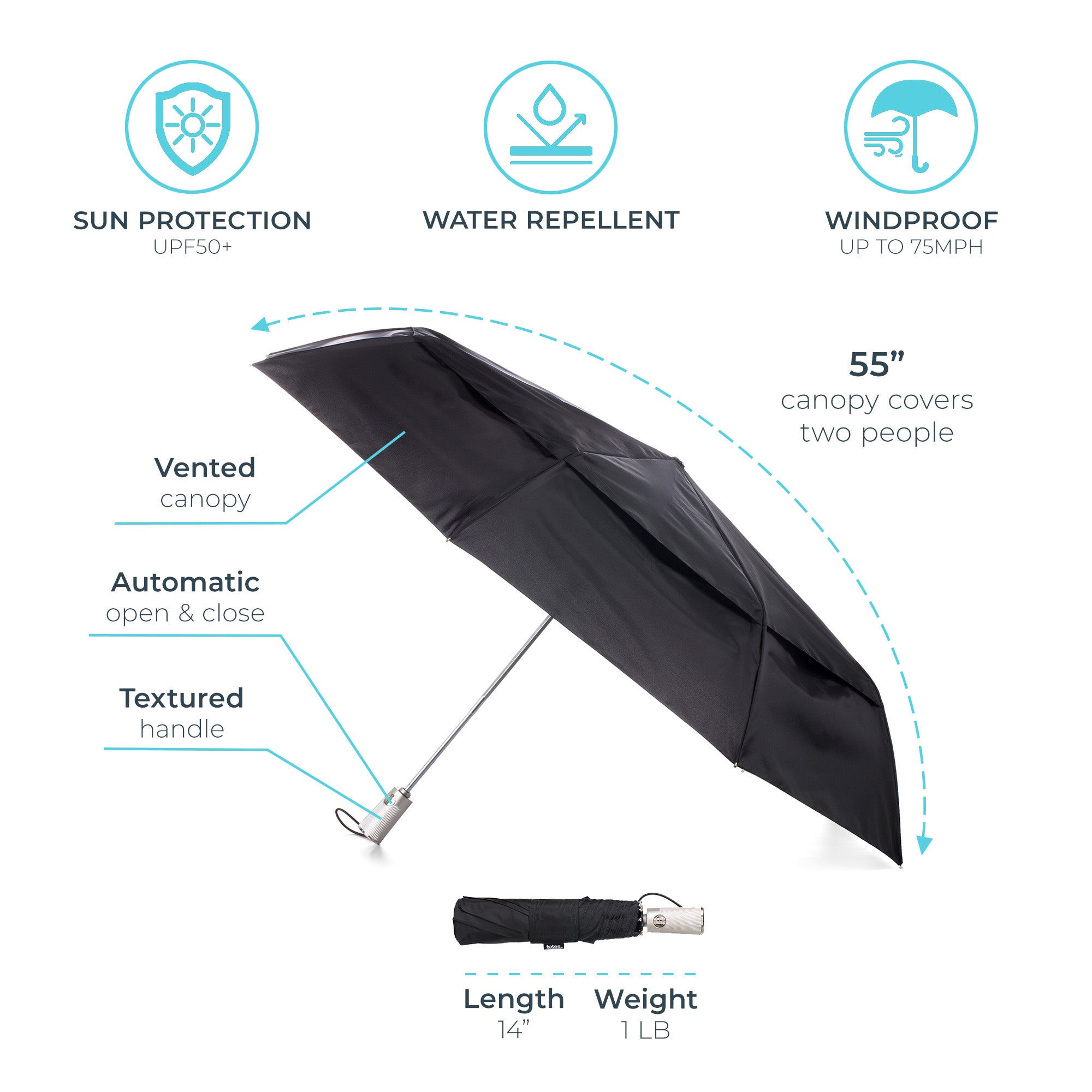
Vented canopies and reverse-close mechanisms solve two separate problems rather than one. Venting addresses the wind itself, letting gusts move through the fabric instead of forcing the canopy to invert. Reverse-close construction addresses what happens after the rain, keeping a soaked canopy from dripping water inside a car or doorway, which is why construction differences between products are worth comparing directly instead of relying on a single spec.
- The Folding Golf Umbrella with Wind & Sun Protection offers a 55-inch arc in a folding format built for harsh conditions.
- The Vented Golf Stick Umbrella with Wind & Sun Protection uses a 60-inch vented canopy and a lightweight non-metal frame.
- The Folding Reverse-Close Umbrella with Wind Protection uses an inside-out fold to keep water off clothes, bags, and car interiors.
- The Stick Reverse-Close Umbrella with Under-Canopy Print pairs a printed under-canopy design with a reinforced reverse-close build.
- The Classic Solid Wood Stick Umbrella relies on water-repellent technology and a traditional wood stick rather than a vented canopy.
- The Ultra Clear Folding Umbrella uses a 42-inch see-through canopy with auto open technology, prioritizing visibility alongside coverage.
Building a Complete Weather Protection Setup
Pairing a windproof umbrella with suitable footwear addresses more of a storm than an umbrella alone can manage. Totes‘ rain boots, including the Chelsea Ankle styles for women and men, are marketed as wearable well past rainy days, which points to regular use rather than occasional emergencies. Combining a vented, wind-rated canopy with ankle or tall rain boots covers both the upper body and footing during heavy weather.
A folding model offers a portable option for commuting, while a stick umbrella suits longer stretches outdoors, and rain boots extend that coverage to footing. Together, these pieces form a weather kit built around overlapping, not duplicate, protection. Totes lists all three categories within reach of each other in its own catalog, which keeps the pieces easy to shop as a set.
Severe weather does not keep a fixed schedule, and gear built for ordinary drizzle tends to show its limits exactly when conditions turn. That is the practical case for favoring construction details over appearance when weather protection is the actual goal.