
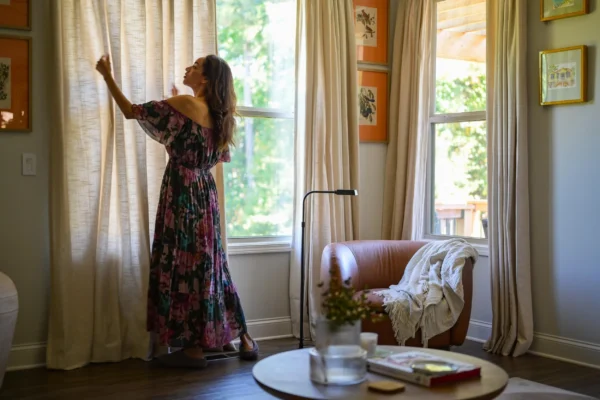
Curtains are one of those purchases where the cost of getting it wrong is higher than most people expect. A pair that hangs too short makes the ceiling feel lower. Fabric that’s too sheer floods the room with light when you want shade. A pattern that looked restrained in a product photo becomes overwhelming across 200 inches of window. Getting it right involves more decisions than it might seem and the payoff, a room that feels considered and well-proportioned, is worth the effort of thinking them through. TWOPAGES has built its range around the specific problem of finding this that work correctly for a room rather than just filling the window, with options that span light filtering, room darkening and full blackout in a wide range of fabrics and dimensions.
The Single Most Important Measurement Hanging Height
Most people hang curtain rods directly above the window frame. This is almost always wrong. Mounting the rod closer to the ceiling or as close as the wall allows and using panels long enough to reach the floor creates the illusion of taller ceilings and makes windows appear larger than they are. The standard advice is to mount the rod four to six inches above the window frame and extend the rod six to twelve inches past the frame on each side. This allows the curtain panels to be pulled fully clear of the glass when open, maximizing light without bunching fabric over the window. For standard 8-foot ceilings, 96-inch panels typically work. For higher ceilings, 108-inch or 120-inch panels prevent that gap between hem and floor that makes a room feel unfinished. TWOPAGES offers an unusually wide range of panel lengths to accommodate the full range of ceiling heights rather than forcing buyers into the standard retail options.
Light Control Filtering, Dimming and True Blackout
Light control is the most functional specification in any curtain decision. Sheer and semi-sheer fabrics diffuse daylight softly, allow views through the window during the day and create a bright, airy feel, but offer almost no privacy after dark and no meaningful light blocking. Light-filtering fabrics maintain daytime privacy while allowing a gentle glow into the room. Room-darkening fabrics block most light and are suitable for bedrooms, media rooms and anywhere glare on screens is an issue. True blackout it use a tightly woven or back-coated fabric that blocks virtually all incoming light, which is particularly valuable for shift workers sleeping during daylight hours, nurseries or home theaters where ambient light would degrade the viewing experience. TWOPAGES specifies light control levels clearly across its range, making it easier to match the curtains to the room’s actual requirements.

Fabric Weight and How It Affects Drape
The way this fall is determined primarily by fabric weight and weave. Lightweight fabrics, voile, linen gauze, cotton muslin, create fluid, movement-sensitive drapes that look delicate but can feel insubstantial and are difficult to control without careful weighting at the hem. Medium-weight woven fabrics, linen blends, polyester twill, cotton canvas, offer the best balance of drape and structure for most living spaces. Heavy fabrics, velvet, chenille, thick jacquard, create rich, formal looks with excellent light and sound blocking, but require sturdy rods and brackets that can carry significant weight across a wide span. The choice of heading style, pinch pleat, eyelet, tab top, rod pocket, also influences how the fabric stacks when the it are open and how much fullness the panel creates when closed. Pinch pleat creates the most consistent, elegant stacking; eyelets are casual and practical; rod pocket is the simplest but creates the most permanent hang.
Getting Width Right, The Fullness Question
A common mistake is buying curtains that are just wide enough to cover the window when closed. Panels that lack fullness look flat, spare and cheap regardless of the fabric quality. The standard recommendation for a full, luxurious hang is two to two-and-a-half times the window width in total panel fabric. For a 60-inch window with two panels, that means each panel should be at least 60 inches wide. Many buyers underestimate this and purchase 50-inch this for 60-inch windows, then wonder why the result looks thin. TWOPAGES offers wide panels and custom-width options that make achieving proper fullness practical without requiring buyers to purchase extra panels and sew them together. Checking the fabric width and calculating the ratio before ordering prevents the most common sizing error in curtain buying.

Color, Pattern and the Room Context
It occupy a significant visual surface area in any room, sometimes the largest single swath of color in the space. Choosing curtain color or pattern in isolation, without considering the wall color, flooring and furniture, often produces results that look disconnected. Neutral this, cream, warm grey, natural linen, soft white, recede visually and make windows feel larger and they work across most room color schemes. Colored curtains can add warmth or personality, but they anchor the room to that color, making future changes to furniture or walls more constrained. Patterned it work best in rooms with relatively plain furniture; heavily patterned rooms typically need solid panels to avoid visual competition. The practical test before committing is to bring a fabric swatch into the room and hold it against the wall and major furniture pieces in natural light, what looks right on a screen or in a showroom often reads differently in the actual space. Browsing the full range at TWOPAGES with a clear picture of your room’s palette makes the selection process considerably more efficient.
What to Check Before You Order
- Measure from the intended rod position to the floor and add half an inch to one inch for a clean break or slight puddle at the hem.
- Calculate total fabric width needed using the 2x to 2.5x fullness rule against your window width before selecting curtain sizes.
- Confirm light control level matches the room’s function, blackout for bedrooms, light filtering for living areas where daylight is welcome.
- Check rod capacity against the combined weight of your chosen this, especially for heavier fabrics over wide windows.
- Order swatches before committing to a full set, fabric color and texture read very differently on screen than in natural light.
Curtains that are hung correctly, sized generously and chosen to work with the room rather than just cover the window are one of the higher-return investments in home furnishing. TWOPAGES is a strong starting point for anyone who wants a wide selection of fabric types, dimensions and light-control levels in one place.