
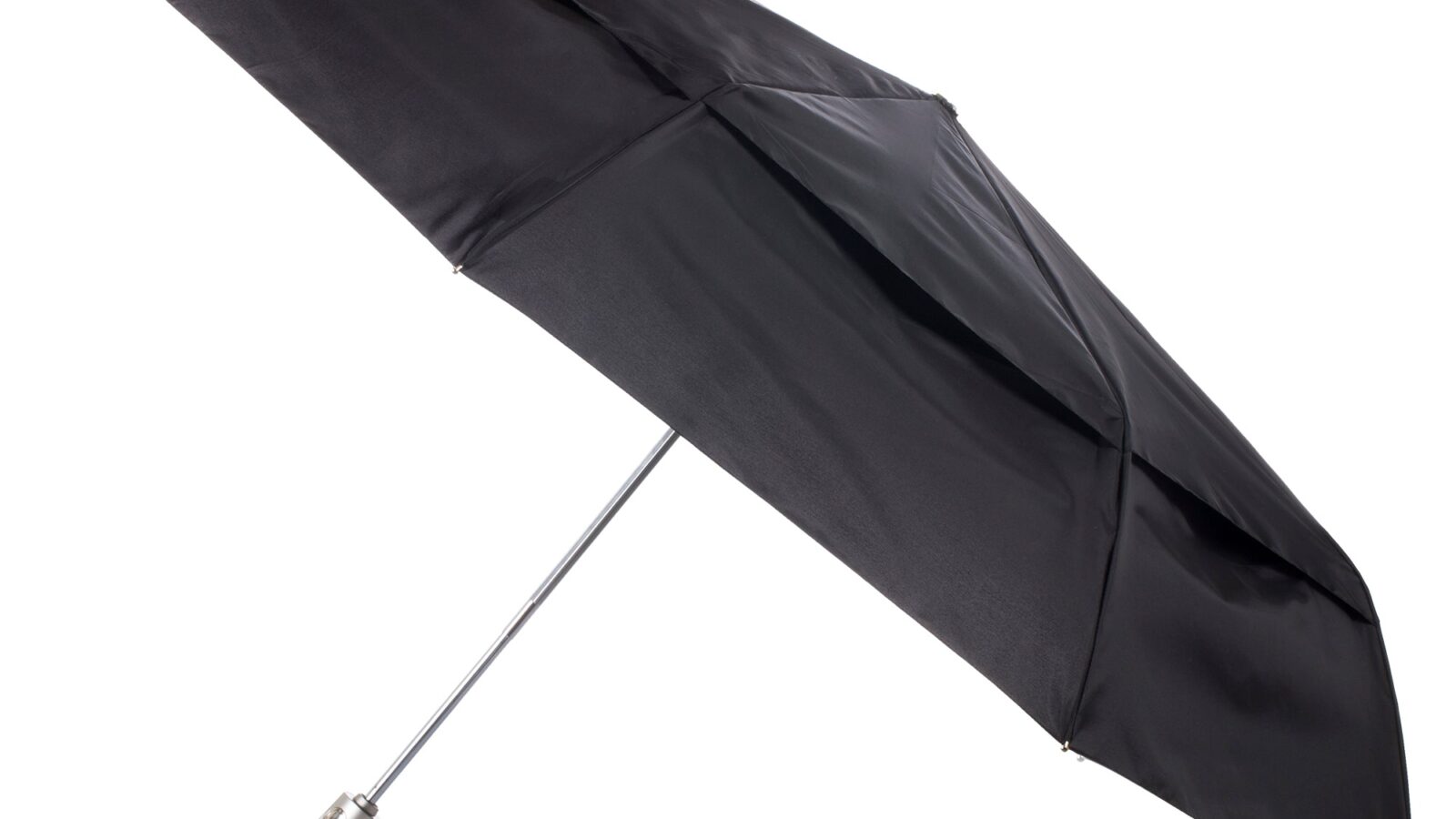
Gusty weather turns a cheap umbrella into a broken mess within seconds, which is why windproof umbrellas have become a practical category of their own rather than a niche upgrade. Totes builds several umbrella lines specifically to handle strong gusts without folding inward or snapping a rib. The sections below look at how that protection is engineered, what formats are available, and where this kind of construction actually matters for anyone comparing rain gear.
Why Standard Umbrellas Fail in High Winds
Most basic umbrellas rely on a canopy stretched tight over a rigid frame, with no way to release pressure when wind pushes against it. That design is exactly what causes the classic inside-out collapse during a storm. Once a few ribs bend, the canopy stops sealing properly and rain gets in anyway.
The problem is rarely the fabric itself but the lack of any mechanism to manage sudden gusts. A frame that cannot flex or vent air has nowhere to send that force except into its own joints. This is the gap that windproof umbrellas are designed to close, and it explains why vented, reinforced designs exist as a separate category from ordinary rain umbrellas.
Titan® Technology: Windproof Engineering Up to 75 MPH
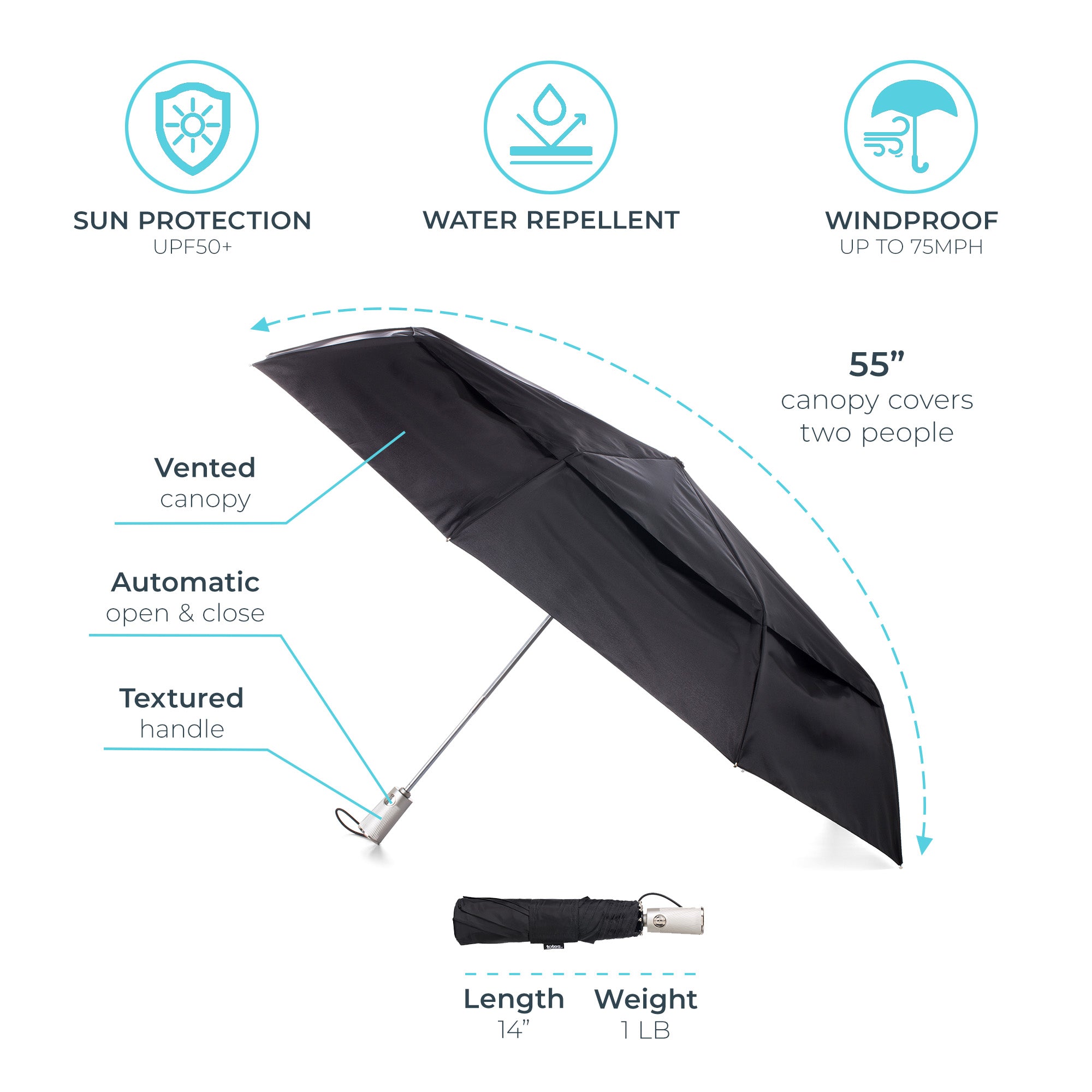
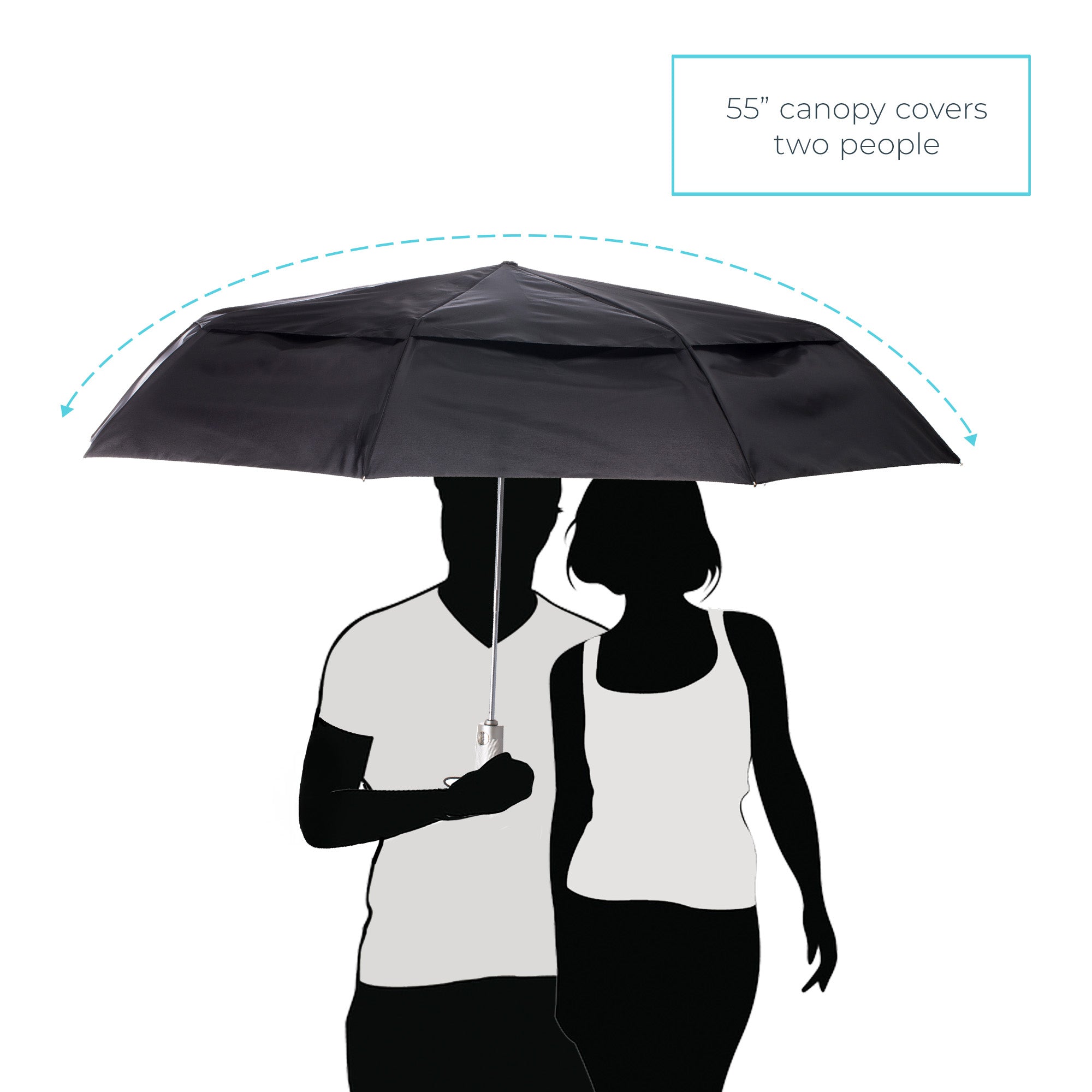
Totes addresses that weak point with Titan® windproof technology, featured across several umbrella lines. The Ultimate Protection Folding Umbrella with Wind & Sun Protection combines this technology with a reinforced vented canopy and is rated to stand strong in winds up to 75 mph, making it one of the more complete all-season designs in the lineup. That same 75 mph rating also covers two golf-size models, the Folding Golf Umbrella with Wind & Sun Protection and the Vented Golf Stick Umbrella with Wind & Sun Protection, which trade compact portability for wider arcs built around a 55-inch and a 60-inch canopy respectively.
Having that figure repeated across folding and stick formats suggests similar engineering standards apply across the range rather than being reserved for a single flagship product. The Vented Golf Stick Umbrella also pairs this rating with a lightweight, non-metal frame, a detail specific to that model rather than the range as a whole.
Folding vs. Stick: Windproof Umbrella Formats at Totes
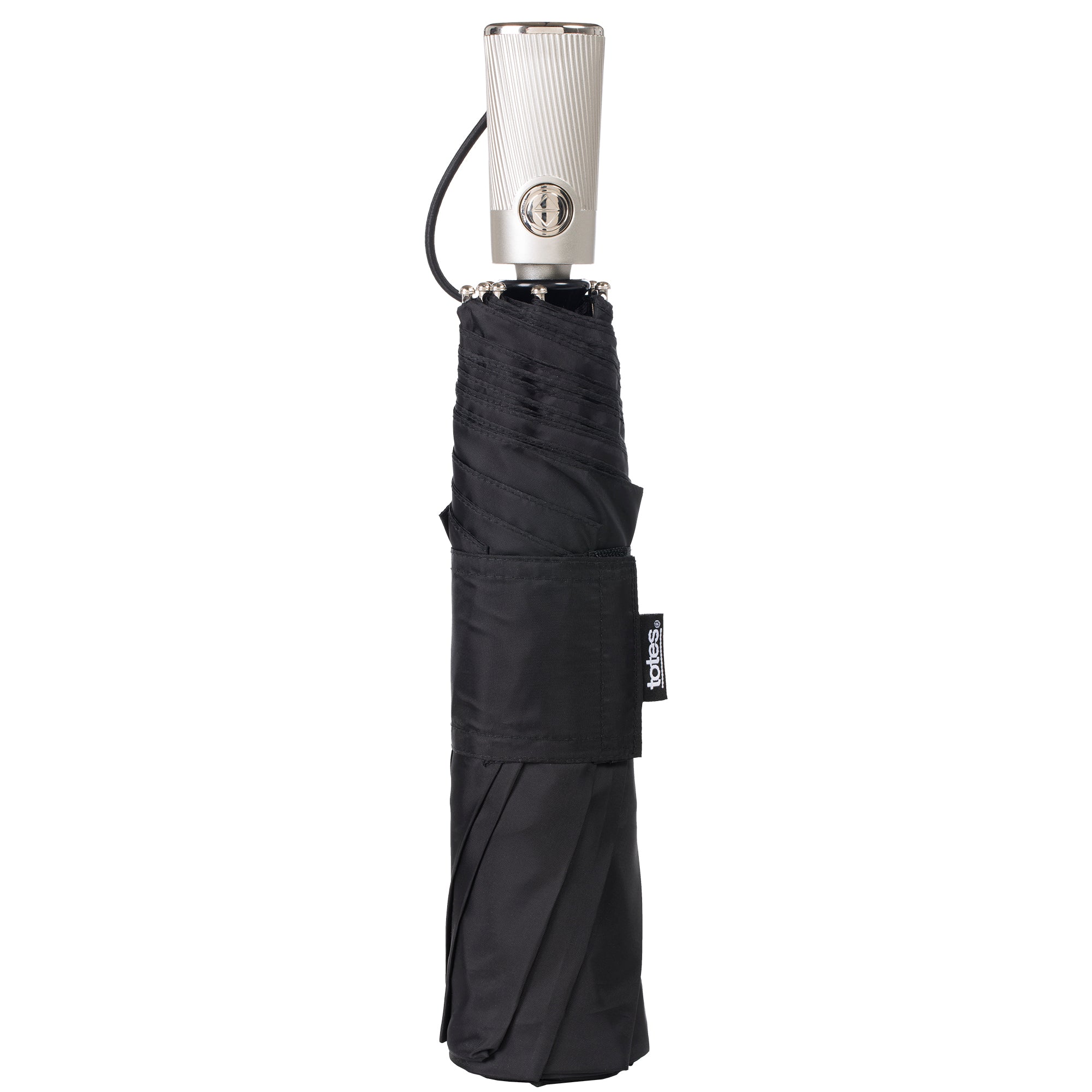
Windproof protection at Totes comes in both folding and stick formats, so the choice often comes down to coverage area and portability. The Folding Golf Umbrella arc is described as offering enough coverage for a person and a companion, while the Vented Golf Stick Umbrella’s wider 60-inch canopy is described the same way, just with more room underneath it.
Stick umbrellas in this group, such as the Stick Reverse-Close Umbrella with Under-Canopy Print, use a traditional fixed-handle shape, carry a wind resistance rating up to 75 mph, and share a reverse-close, inside-out fold with the Folding Reverse-Close Umbrella with Wind Protection. That particular stick model also adds a printed pattern on the underside of the canopy, a styling detail not found on the plainer folding version. Folding versions, meanwhile, pack down smaller for bags and daily commutes, so each format carries the same underlying wind-resistant engineering, just packaged differently for different routines.
Vented Canopy Design and Reverse-Close Mechanisms
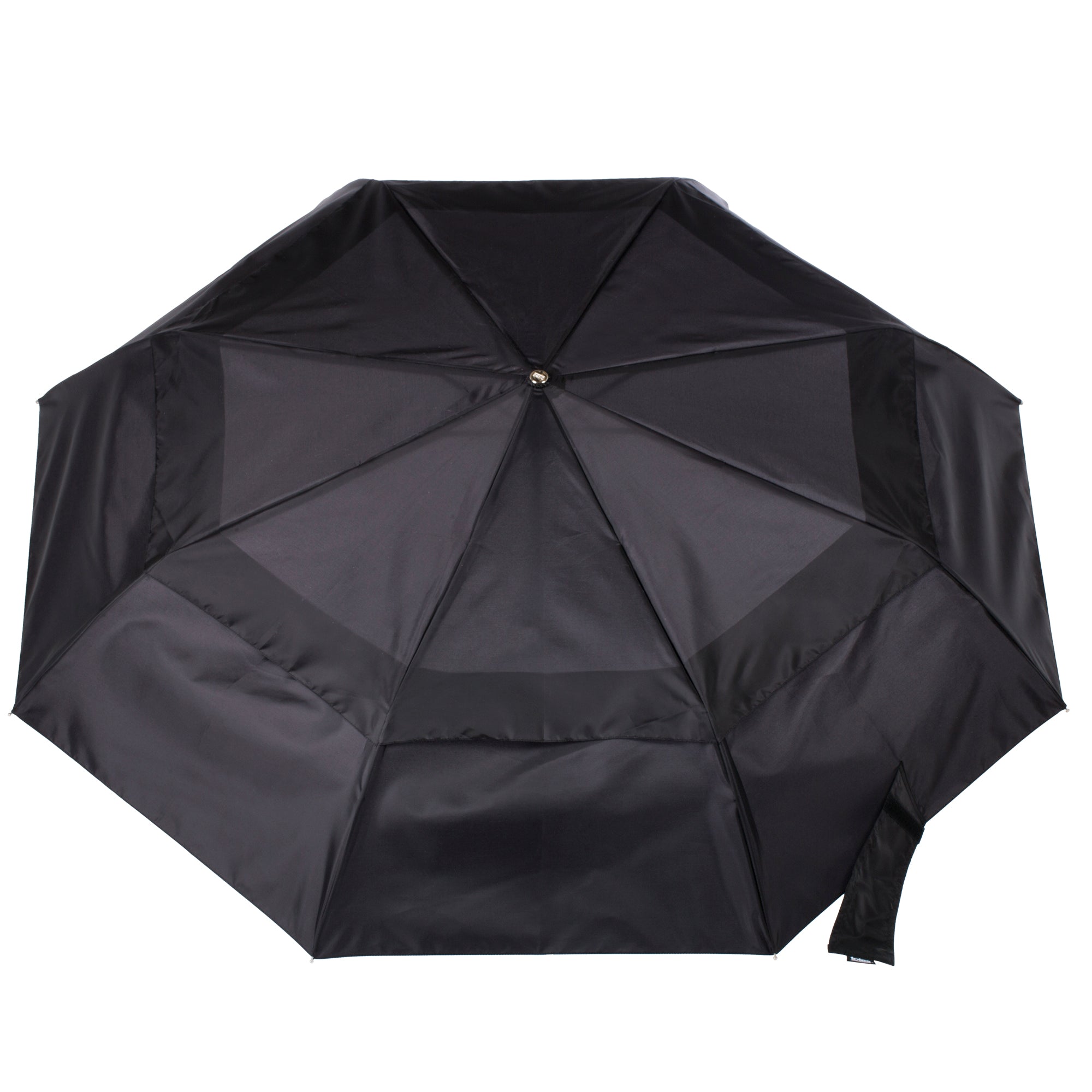
A recurring feature across these umbrellas is the vented canopy, which lets air pass through rather than pushing the whole surface flat against a gust. The Ultimate Protection Folding Umbrella pairs this venting with its Titan® frame, while the Vented Golf Stick Umbrella adds an ergonomic handle for a steadier grip during use. Totes applies the same venting principle differently depending on the model, but the underlying goal of letting gusts escape rather than fight the frame stays consistent.
Reverse-close folding is the other mechanical piece of this design, and it works by turning the canopy inside out as it closes so that water collects on the inner surface instead of dripping outward. That inside-out action is what keeps a closed, wet umbrella from soaking a bag or a car seat. In addition to the wind rating already noted for the stick and folding versions, this closing mechanism is the detail that most changes the everyday handling of a wet umbrella.
Everyday Protection in Unpredictable Weather
Beyond storm-level gusts, these umbrellas are also positioned for routine daily use. The Folding Reverse-Close Umbrella with Wind Protection is described specifically as a commuter umbrella, built around a water-repellent canopy meant to keep clothes, cars, and bags dry once it is closed.
The Classic Solid Wood Stick Umbrella, styled differently with a solid wood stick and crook handle, also uses what is called advanced water-repellent technology. This shows that weather resistance is not limited only to the Titan® windproof line, even though the 75 mph rating specifically belongs to the windproof-labeled products. Totes backs its umbrellas more broadly with a Limited Lifetime Warranty covering defects in materials or workmanship.
Where Windproof Umbrellas Outperform Regular Styles
The clearest difference shows up when comparing a vented, reinforced canopy against a standard sealed one during sustained wind. The Stick Reverse-Close Umbrella is described as engineered to withstand gusts that would turn lesser umbrellas inside out. That kind of direct comparison points to venting and frame reinforcement as the features doing the actual work, rather than fabric weight alone.
Golf-style windproof umbrellas also stand apart from standard compact styles through coverage area paired with wind resistance. A 55-inch or 60-inch arc, rated to 75 mph, offers a combination that a typical small umbrella, built mainly for occasional light showers, is not designed to match. Totes lists the specific features that recur across this collection below.
- Titan® windproof technology appears across several folding and stick umbrellas, rated to withstand winds up to 75 mph.
- Reinforced, vented canopies let gusts pass through rather than force the frame to collapse.
- Reverse-close, inside-out folding mechanisms are built into select folding and stick models to keep water contained when closing.
- Golf-size arcs of 55 inches and 60 inches provide expanded canopy coverage on select windproof models.
- A non-metal frame is used on the Vented Golf Stick Umbrella for a lightweight yet durable structure.
- A Limited Lifetime Warranty covers umbrellas found to be defective in materials or workmanship.
Taken together, these details describe a line that treats wind resistance as a core engineering goal rather than a marketing label. Anyone comparing windproof umbrellas against ordinary rain umbrellas can see the difference mainly in venting, reinforced frames, and rated wind tolerance.
That combination is what separates a product built to survive a storm from one that simply gets wet in the rain.