
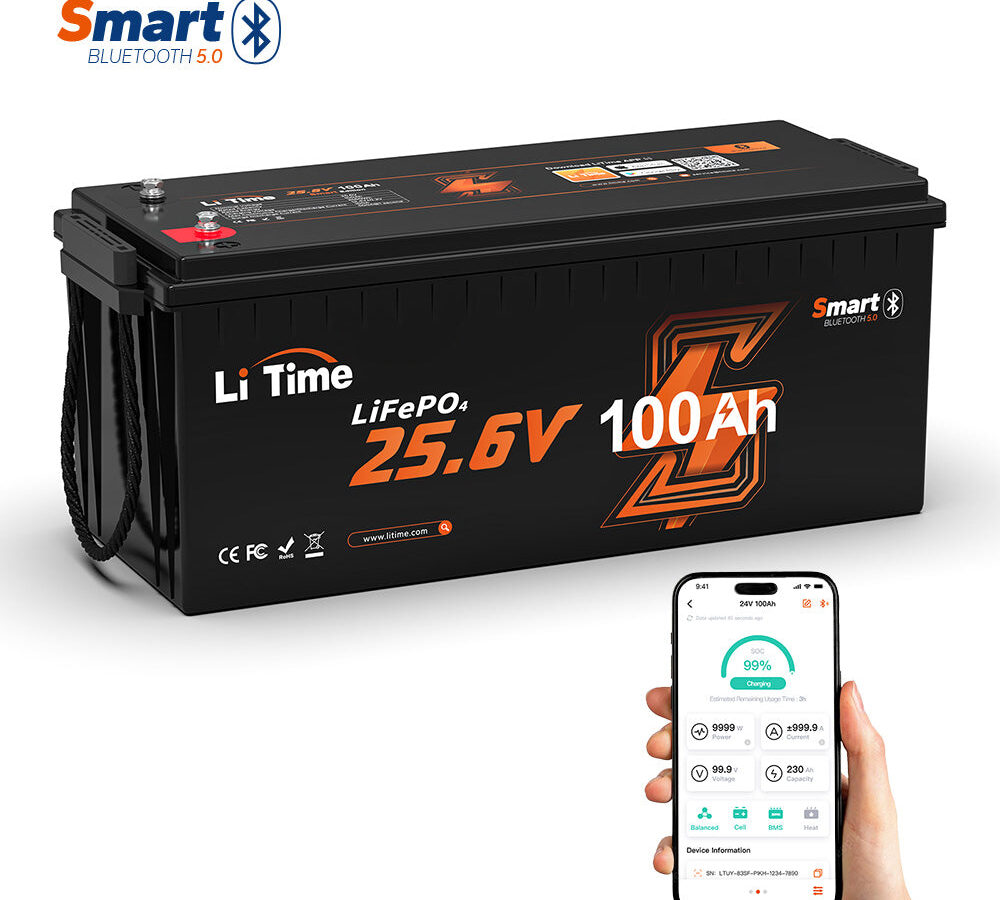
Voltage often gets treated as a single number on a spec sheet, but it actually determines what a battery is built to do. LiTime LiFePO4 battery tiers span 12V, 16V, 24V, and 48V systems, each matched to different equipment and use cases, from RV house loads to trolling motors to marine electronics. Looking at how these voltage classes differ helps clarify which type of setup a given application actually calls for.
Understanding LiTime’s LiFePO4 Battery Voltage Tiers
It organizes its lithium battery range by voltage class, with 12V, 16V, 24V, 36V, and 48V lines listed separately on its site alongside chargers, inverters, and controllers. Each voltage class serves a distinct function rather than simply offering more or less power. A 12V battery might run a refrigerator or a small trolling motor, while a 48V unit is built for higher-power integration into larger systems. This structure across LiTime LiFePO4 battery tiers lets RV owners, anglers, and off-grid users match a battery’s voltage to the equipment already installed.
12V LiFePO4 Batteries: Capacity Variants from 12Ah to 460Ah
The 12V line is the widest in the The brand catalog, spanning capacities from a compact 12Ah fish finder battery up through larger Mini and Group options. The 12V 12Ah model delivers 153.6Wh of energy with 153.6W max continuous output, built around EV-grade LiFePO4 cells rated for 4000+ cycles at 100% DOD. At the other end, the 12V 320Ah Mini battery packs 4096Wh into a 14.49 by 7.44 by 10.04 inch case weighing 57.17 lbs, supported by a 200A BMS for continuous output.
Between those extremes sit models built for specific jobs. The 12V 45Ah U1 battery targets 20 to 30 lb trolling motors, fish finders, and mobility devices, claiming 174% more energy than a comparable 12V 35Ah lead-acid battery while weighing 59% less. The 12V 100Ah Plus marine battery, used by Major League Fishing, sustains 150A for three minutes and can handle 300A for 10 seconds or 500A for one second, making it suited to higher-load trolling motors and electric outboards.
16V Fish Finder and Marine Electronics Systems
LiTime‘s 16V collection is dedicated specifically to fish finders, forward-facing sonar, and other marine electronics, separate from the 12V and 24V lines used for propulsion. The 16V 100Ah battery is positioned as a pro-level option, with It citing up to 25% longer runtime than comparable 12V systems under similar loads thanks to reduced voltage drop. The 16V 70Ah model offers 1120Wh of energy, enough to run one fish finder alongside two additional electronics devices for extended periods.
A smaller 16V 30Ah battery rounds out the group, built for kayak fish finders and described as a step up from standard 12V setups for compatible electronics. Across all three sizes, LiTime frames the dedicated 16V voltage as a way to separate electronics power from trolling motor draw, which it says helps reduce interference and keeps sonar readings more stable.
24V Batteries: Dual-Purpose and Trolling Motor Performance
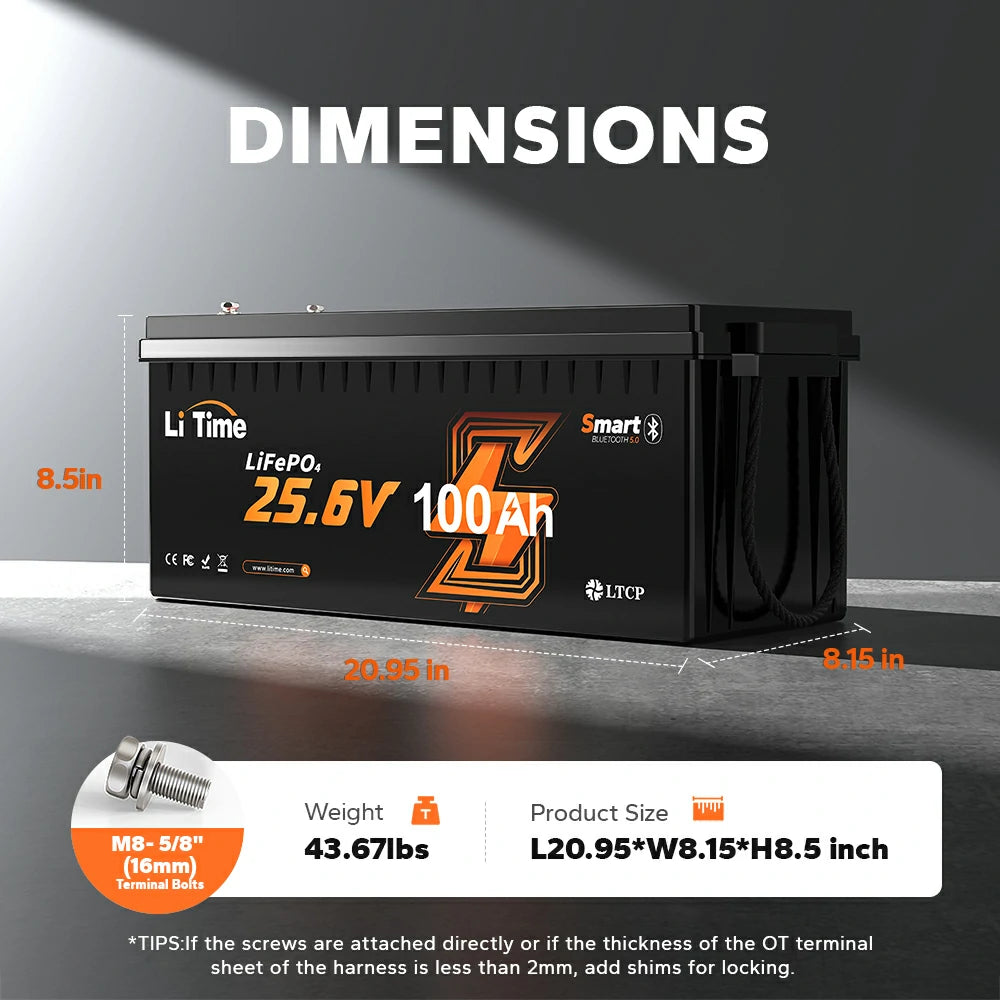
The 24V tier is built primarily around trolling motor performance and RV or truck applications. The 24V 60Ah Group 24 battery delivers 60A of continuous discharge and is marketed as a replacement for two 12V batteries wired in series, cutting wiring complexity and weight by more than 50% compared to lead-acid. Its compact Group 24 footprint measures 10.24 by 6.5 inches in the stated dimensions.
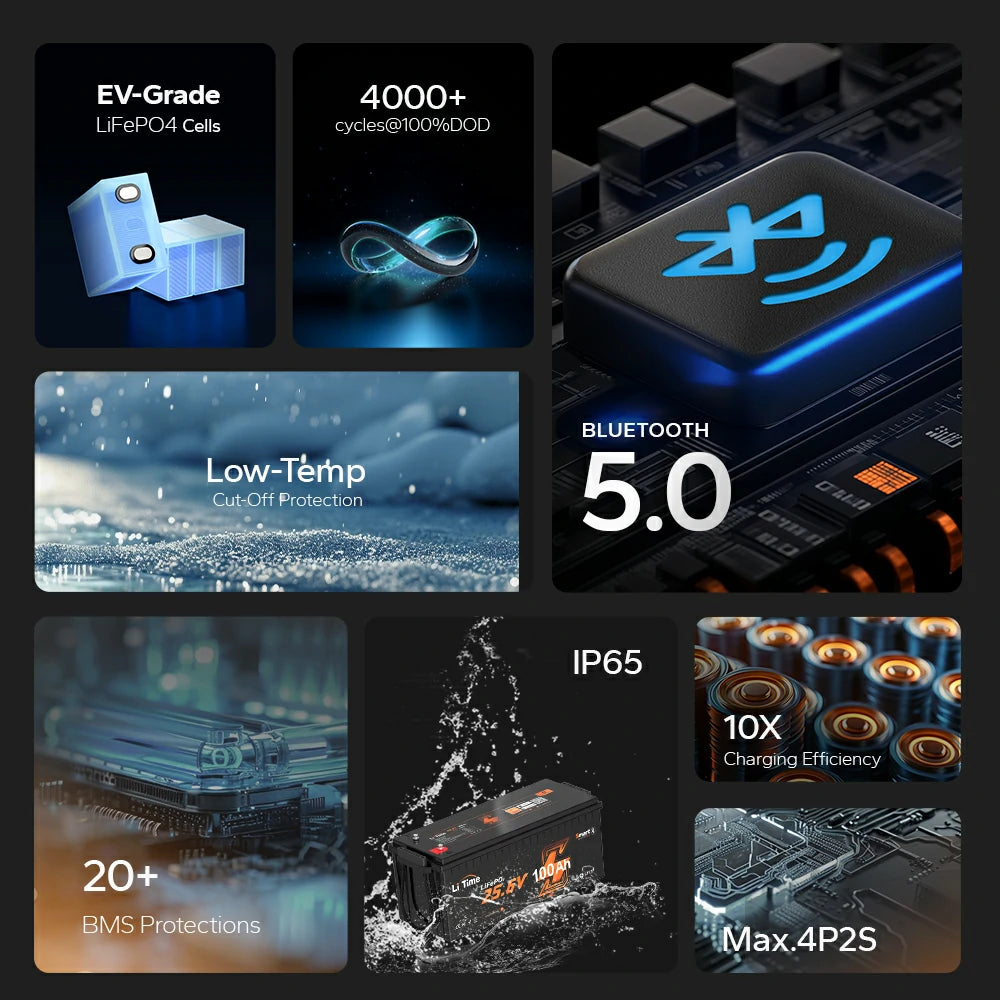
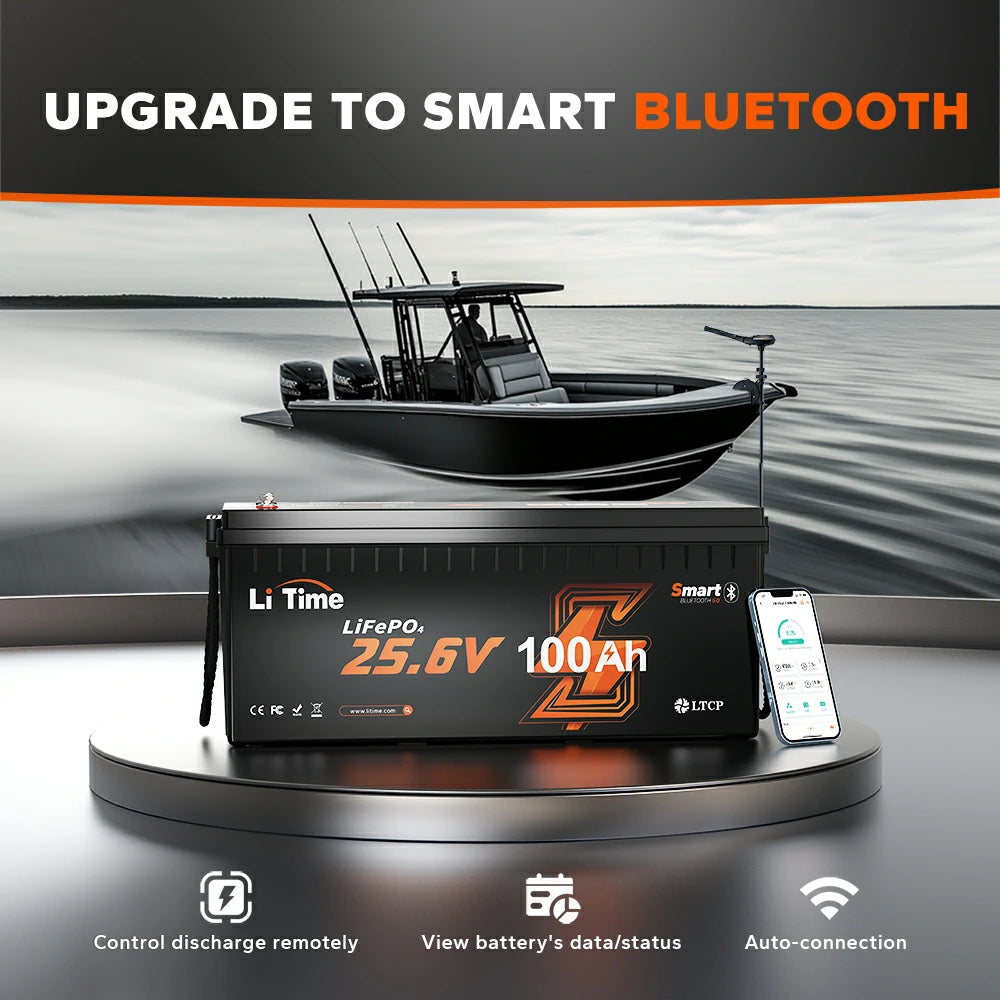
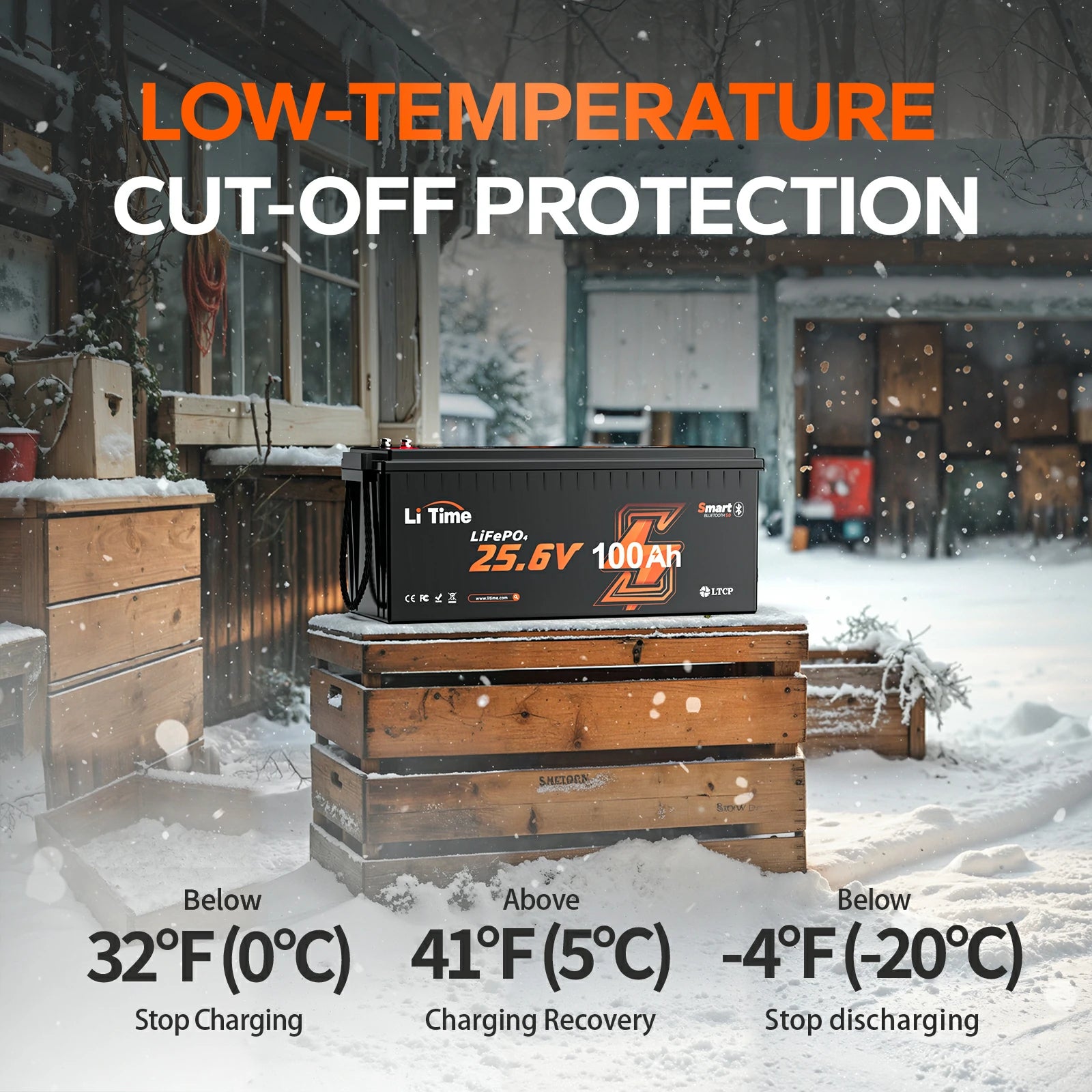
Separately, the 24V 100Ah battery is built for RV and truck use, offering 4,000+ deep cycles alongside Bluetooth monitoring and low-temperature protection. LiTime also lists a like-new version of this 100Ah model, drawn from units originally purchased with the wrong capacity or compatibility for a customer’s setup, each individually tested and covered by the same 5-year warranty as new stock. This gives the 24V class a dual identity, serving both dedicated trolling motor setups and more general house-battery duty.
48V ComFlex Batteries for High-Power Integration
At the top of the voltage range, the 48V ComFlex line is designed for higher-power integration into larger systems rather than standalone appliance use. The brand markets its 48V 100Ah ComFlex battery alongside a 12V 320Ah ComFlex unit under the banner of easier integration, suggesting these models are meant to slot into existing battery banks or expandable setups. The 48V class sits distinctly apart from the 12V through 24V lines built for individual motors or electronics.
This higher-voltage option matters for larger off-grid or whole-system installations where amperage needs to stay manageable even as total power demand rises. Within the broader lineup of LiTime LiFePO4 battery tiers, 48V represents the point where the product range shifts from single-device power toward integrated system design.
Specialized Features Across LiTime’s Product Tiers
Beyond voltage and capacity, It differentiates models through added features like Bluetooth monitoring, low-temperature protection, and dual-purpose starting capability. The 12V 165Ah Dual Purpose battery, for instance, delivers 1200 CCA and 1300 MCA for cranking fuel-powered outboard motors, then switches to power trolling motors, fish finders, and onboard electronics afterward. Chargers are built to match, such as the 12V 20A LiFePO4 charger with 14.6V output, 0V activation for BMS-protected batteries, and 3-stage charging.
Cold-weather performance is handled through dedicated heating features, which LiTime groups under its LiHeat line. These are offered across multiple capacities and voltage classes rather than being limited to a single model, giving buyers a consistent way to address cold-climate charging regardless of which battery size they select.
- The LiHeat series uses Dual-Mode Self Heating, which can warm the battery automatically while it is plugged in.
- The same LiHeat system can also preheat the battery using its own stored power before charging begins, without needing an external plug.
- This dual-mode heating is available on the 12V 320Ah Mini battery as well as the 12V 165Ah model, showing it spans more than one capacity within the 12V class.
- The 12V 165Ah Dual Purpose Marine battery separately includes auto heating alongside its Bluetooth monitoring and starting capability.
- LiTime positions these heating features as a way to keep charging reliable through cold-weather conditions rather than as a feature limited to one specific product line.
Taken together, these features show that The brand’s range is not just about voltage or capacity numbers. Bluetooth connectivity, heating systems, and application-specific engineering appear throughout the 12V, 16V, 24V, and 48V groups, with the mix of features varying by model rather than by voltage class alone.
Matching Power Needs to the Right Voltage Class
Reviewing the full range makes clear that voltage selection depends on the equipment being powered rather than a simple preference for more capacity. A kayak angler running a fish finder has little use for a 48V ComFlex battery, just as a large off-grid installation gains little from a 12Ah unit. Working through the available LiTime LiFePO4 battery tiers by application, rather than by size alone, keeps the selection process grounded in actual equipment requirements.