
Picking between wireless CarPlay adapters means weighing factory compatibility, phone type, and the kind of in-car entertainment wanted. A clear wireless CarPlay adapter comparison starts with the vehicle itself, since every model in this lineup depends on an existing wired connection before anything else matters. From there, the choice often comes down to form factor, phone support, and whether built-in streaming matters at all.
Factory Wired CarPlay Requirements and Device Compatibility Across Ottocast Models
Every adapter in the range requires a vehicle that already supports factory wired CarPlay or wired Android Auto. None of them add CarPlay to a car that never had it, so checking for an existing wired port and an on-screen CarPlay icon is the first step. Ottocast states that its adapters generally suit vehicles from recent model years onward, though trim-level differences can still apply.
Phone compatibility also matters in a wireless CarPlay adapter comparison. Ottocast lists support for iPhone running iOS 10 or newer, along with Android devices on Android 11 or newer, and notes that selected Samsung and Google phones also work with Android 9. Sony aftermarket head units are called out as incompatible, and Mitsubishi owners are asked to confirm details with support before ordering.
U2Air Edge: Compact Design and Dual-System Support
Ottocast describes the U2Air Edge as a device that converts a factory-wired CarPlay or Android Auto connection into a wireless one without altering the dashboard layout, and it ships in silver, burgundy, and black finishes to suit different console trims. It reconnects automatically to a paired phone every time the vehicle starts, removing the need to plug in a cable each drive. Its housing is described as refined inside and out, with detailing meant to sit comfortably within a console tray or cubby.
What separates the U2Air Edge from some other models is its dual-system support. It works with vehicles wired for CarPlay and with vehicles wired for Android Auto, rather than being locked to one platform. This flexibility makes it a relevant reference point in any wireless CarPlay adapter comparison involving mixed-device households.
Mini Cube 3.0: Space-Saving Form Factor and Auto-Reconnection
Ottocast positions the Mini Cube 3.0 as a compact, plug-and-play option that skips companion apps entirely. Its 90-degree USB connector is designed to save space and keep cabling tidy near the dashboard port. For drivers who want wireless CarPlay and Android Auto without extra configuration steps, this model is built around simplicity rather than added features.
Fast auto-reconnection is one of the Mini Cube 3.0’s defining traits, pairing with a phone again each time the car starts. Because setup skips any app download, the process tends to appeal to drivers who want the simplest possible hands-off routine. That contrasts with the Play2Video Pro, which layers on a full software environment rather than staying minimal.
Play2Video Pro: All-in-One Adapter with Streaming Capabilities
The Play2Video Pro goes further than a basic wireless conversion. Ottocast describes it as an all-in-one wireless adapter and streaming box, running on what the brand calls a stable Closed Android System. Pre-installed apps such as Netflix and YouTube are part of the package, which sets this model apart from adapters that only handle wireless CarPlay or Android Auto conversion.
This streaming layer is the main reason the Play2Video Pro stands apart in a wireless CarPlay adapter comparison focused on in-car entertainment. Rather than relying solely on phone mirroring, it adds a built-in software environment for video content. Drivers considering options beyond navigation and calls may find this distinction relevant when weighing it against the U2Air Edge or Mini Cube 3.0.
FOTA Updates and Firmware Support Across the Ottocast Range
Firmware over the air, known as FOTA, appears across multiple products in the lineup rather than being exclusive to one model. The Mini Cube 3.0 listing mentions FOTA upgrades for ongoing bug fixes, while the Car TV Mate Pro description references automatic reconnection tied to firmware, a detail not stated for either other adapter. This shared update approach means owners of different models are not left on separate maintenance paths.
Whether the device in use is the U2Air Edge, Mini Cube 3.0, or Play2Video Pro, over-the-air updates are part of how the broader product range stays current. That matters beyond the adapters themselves, since some accessories depend on the same update mechanism to unlock their functions.
Accessory Integration: OttoSafe Knob and Wireless Controller Options
Beyond the adapters, Ottocast sells accessories meant to extend how drivers interact with CarPlay. The OttoSafe Knob is described as made for CarPlay and compatible with the Mini series, including Mini NOVA, Mini Pico, and the U2Air Edge. It requires an adapter firmware update before it functions and does not support wireless Android Auto, a limitation stated directly in the product listing.
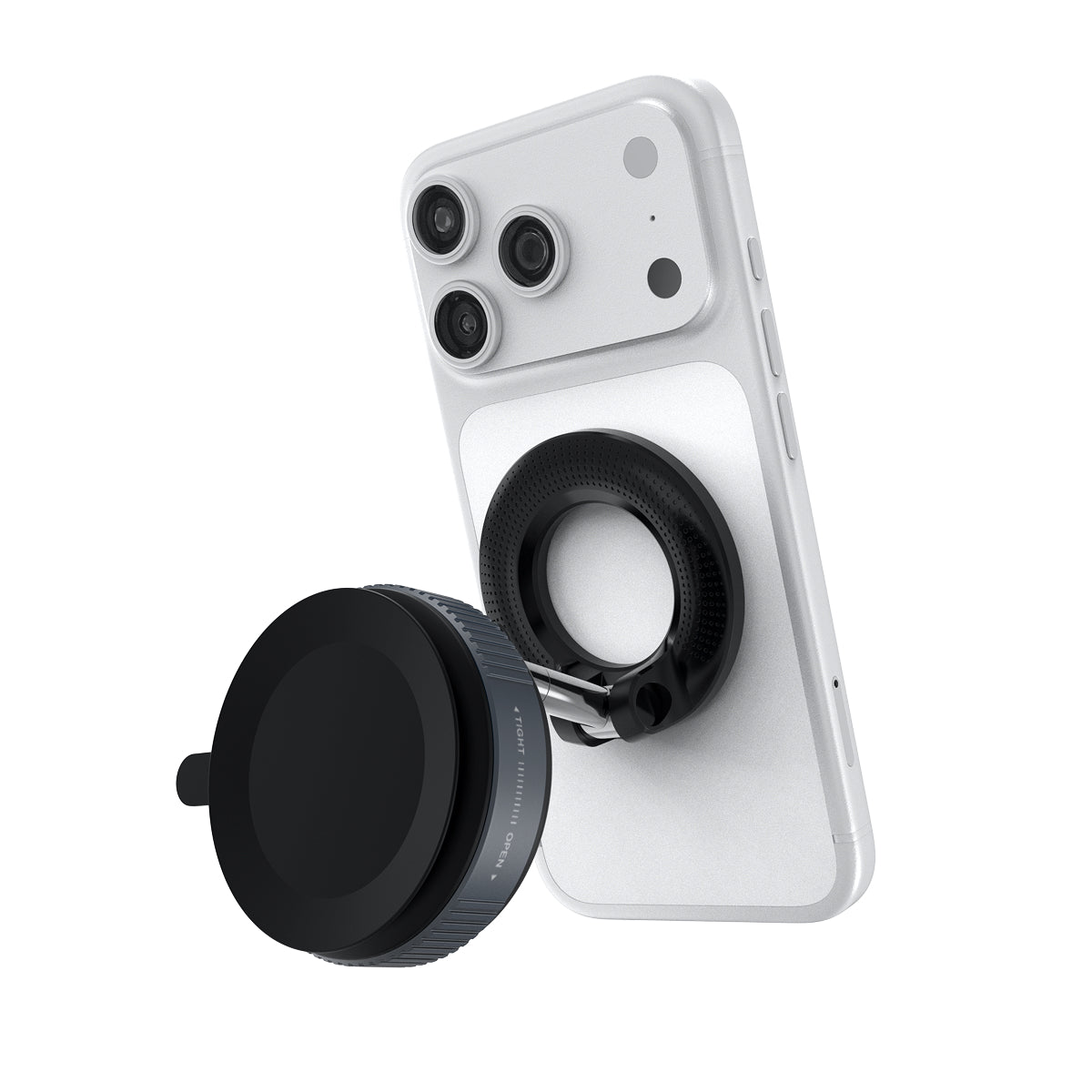
The knob itself is a physical rotary dial, turned to select an option, pressed to confirm it, and tapped to return home. A separate Wireless Controller is also listed among the accessories, alongside items such as magnetic phone mounts. Together these accessories suggest that the range extends past the adapters into small hardware meant to make in-car controls more tactile.
- The U2Air Edge supports both factory wired CarPlay and factory wired Android Auto, converting either into a wireless connection.
- The Mini Cube 3.0 uses a 90-degree USB connector built for a compact, space-saving fit near the dashboard port.
- The Play2Video Pro adds a Closed Android System with pre-installed streaming apps such as Netflix and YouTube, which the other two models do not include.
- Only the U2Air Edge, among these three, is listed as compatible with the OttoSafe Knob accessory.
- The Mini Cube 3.0 is described as app-free at setup, while the Play2Video Pro’s streaming features rely on its own onboard software environment.
Any wireless CarPlay adapter comparison across this lineup ends up being less about one universal device and more about matching a vehicle’s wired setup to a specific use case. Firmware support and accessory options tie the range together even as each model leans toward something different.