
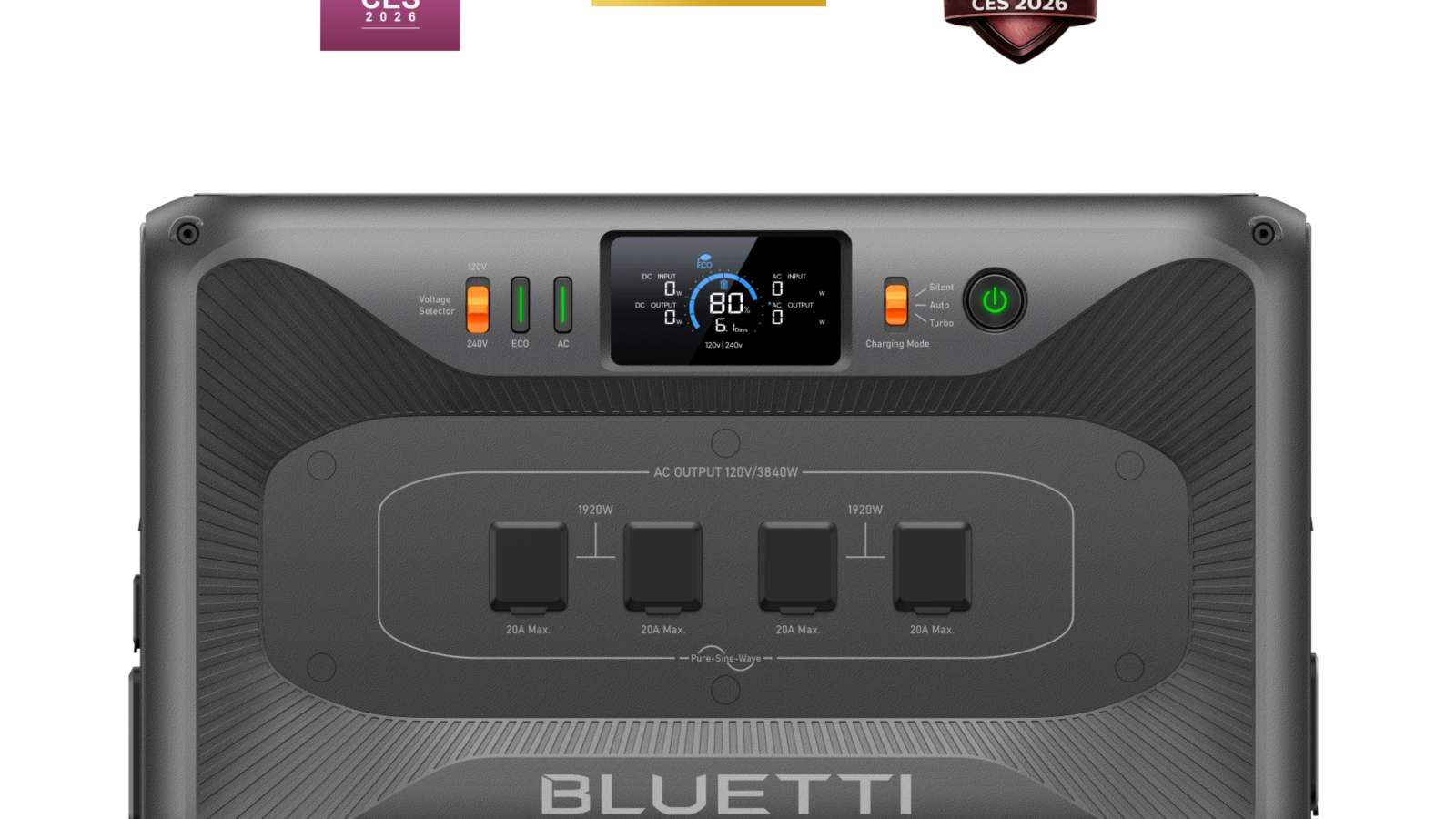
Budget portable power stations do not have to mean stripped-down performance, and Bluetti‘s lineup of entry and mid-capacity units makes that case plainly. The range runs from a hand-carry model to a larger home-backup station, each built around a single, self-contained battery pack. For households and campers weighing budget portable power stations on weight, output, and charging speed, these models offer concrete reference points rather than vague promises.
What the BLUETTI Elite Series Delivers
The series spans several capacity points, from a compact unit light enough for one hand to a larger station meant for home backup during outages. Each model uses LiFePO₄ battery chemistry, consistent with Bluetti‘s wider catalog. Because the lineup covers such different sizes and uses, it gives a practical way to compare budget portable power stations without stepping into larger, multi-battery home systems.
BLUETTI Elite 100 V2 and Elite 30 V2: Lightweight Portable Options
The Elite 100 V2 weighs 25lbs and fits into a 17L frame, which makes it easy to move between a vehicle, a tent, and indoor storage. It delivers 1,800W of output from a 1,024Wh capacity, and its 1,200W AC TurboBoost feature reaches an 80% charge in 45 minutes. A 1,000W solar input with built-in MPPT can bring the unit to a full charge in roughly 70 minutes under suitable sunlight.
The Elite 30 V2 sits below it in size, holding 288Wh of capacity and 600W of rated power, extending to 1,500W under lifting power for brief surges. A 140W PD fast-charging port rounds out the unit, useful for charging laptops and tablets directly from the station. Both units skip the multi-battery hardware found in larger expandable systems, so each remains a single, standalone purchase. Bluetti designs these portable units around immediate usability rather than long-term system expansion.
BLUETTI Elite 300: The World’s Smallest 3 kWh Station
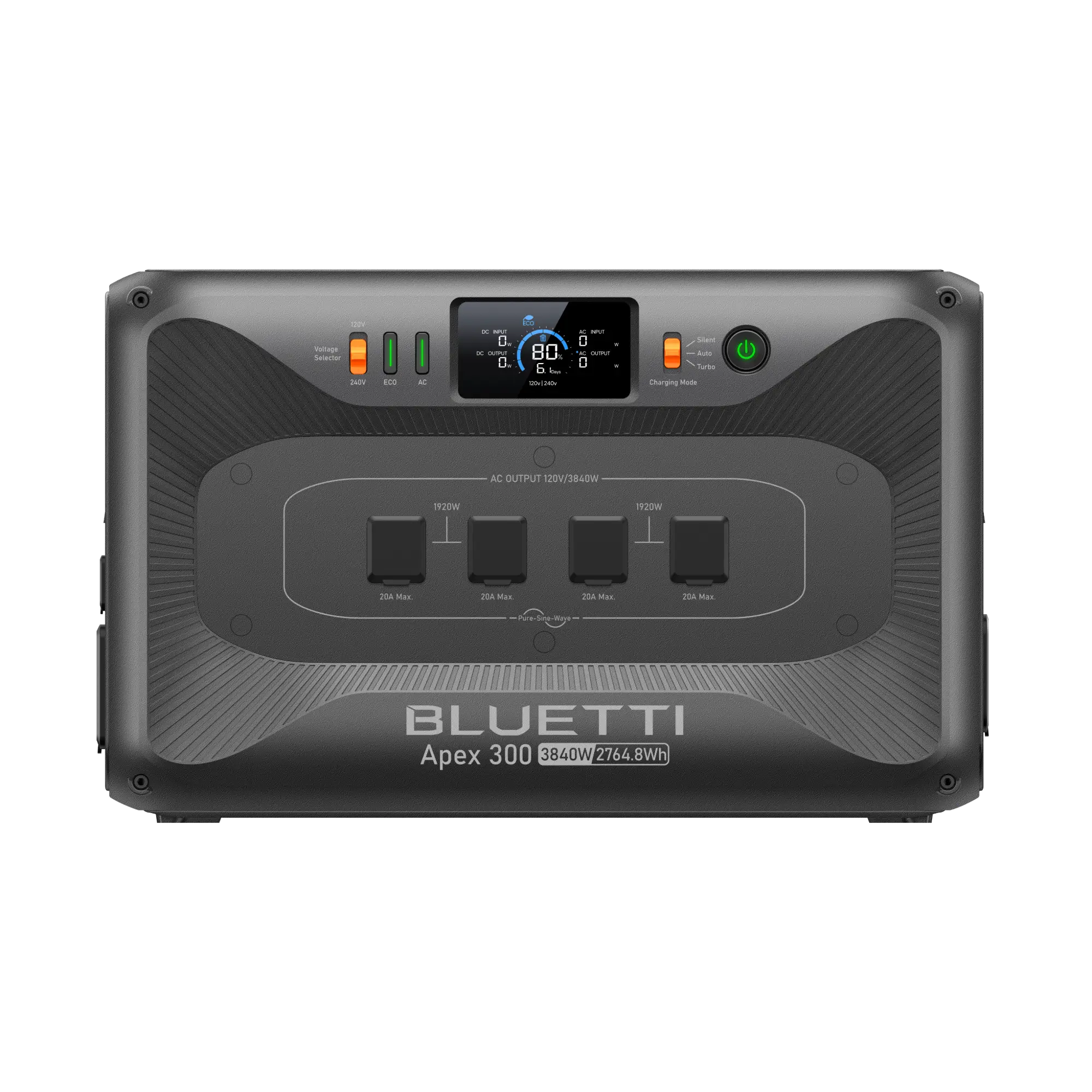
The Elite 300 fits into a body roughly the size of a 2kWh unit while holding 3,014Wh of capacity. It outputs 2,400W, with a lifting power of 4,800W for heavier loads such as microwaves or space heaters. The unit also carries a rated cycle life of over 6,000 charges, a figure the brand lists directly on the product page.
Beyond raw output, the Elite 300 includes a TT-30 outlet for direct RV connection and a 12V/30A DC port for lights and small appliances. Its 10ms UPS switchover is designed to keep security systems, aquariums, and home workstations running without interruption. An app adds remote monitoring and wake-up control over Bluetooth and Wi-Fi, so the unit can be checked without physical access.
BLUETTI Elite 400: Maximum Capacity in the Elite Series
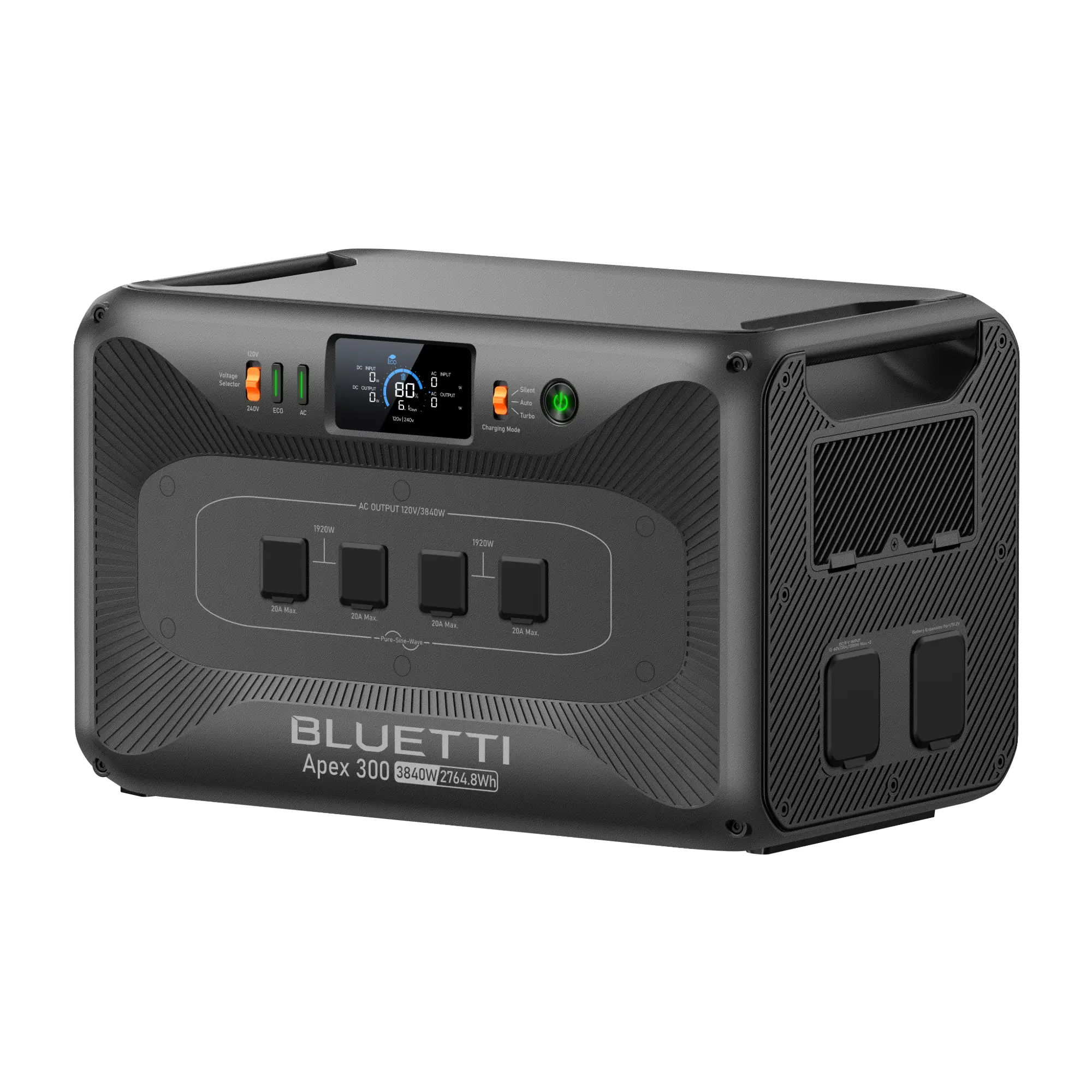
The Elite 400 sits above the Elite 300 in raw capacity while staying in the same single-unit format rather than a multi-battery platform. Bluetti lists it for essential home backup, with 3,840Wh of capacity together with 2,600W of output for running several devices through longer outages. Unlike larger systems that add capacity through separate battery packs and a hub, the Elite 400 keeps its full capacity built into one box.
Expandability Without Breaking the Bank
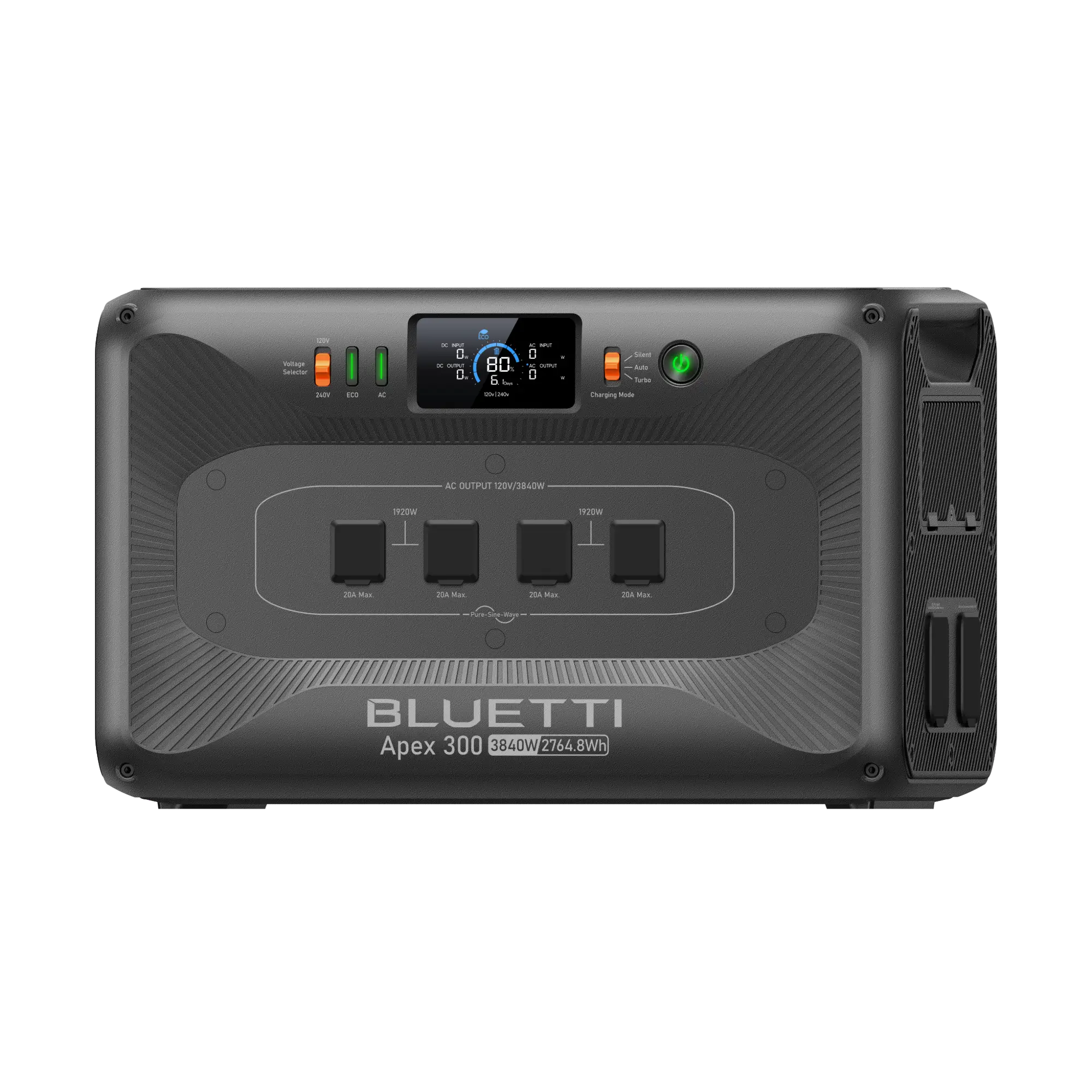
Even within this smaller lineup, some models support added accessories rather than requiring a full system upgrade. The Elite 300, for example, is available in bundles that pair the base unit with solar panels or extra chargers, including configurations with a 350W panel, a 500W panel, or two 200W panels. These combinations add solar charging capacity in stages, without requiring a jump to a larger, multi-part system.
Such accessory bundles keep the Elite 300 adaptable for an off-grid setup, while the Elite 100 V2 and Elite 30 V2 stay focused on portability rather than solar expansion. By staying in a single enclosure, the smaller units avoid the added hardware, such as hub units and extra battery packs, that larger expandable home systems require. Bluetti‘s approach to scaling capacity within this range distinguishes these budget portable power stations from their larger, modular counterparts.
Real-World Backup Scenarios and Runtime Examples
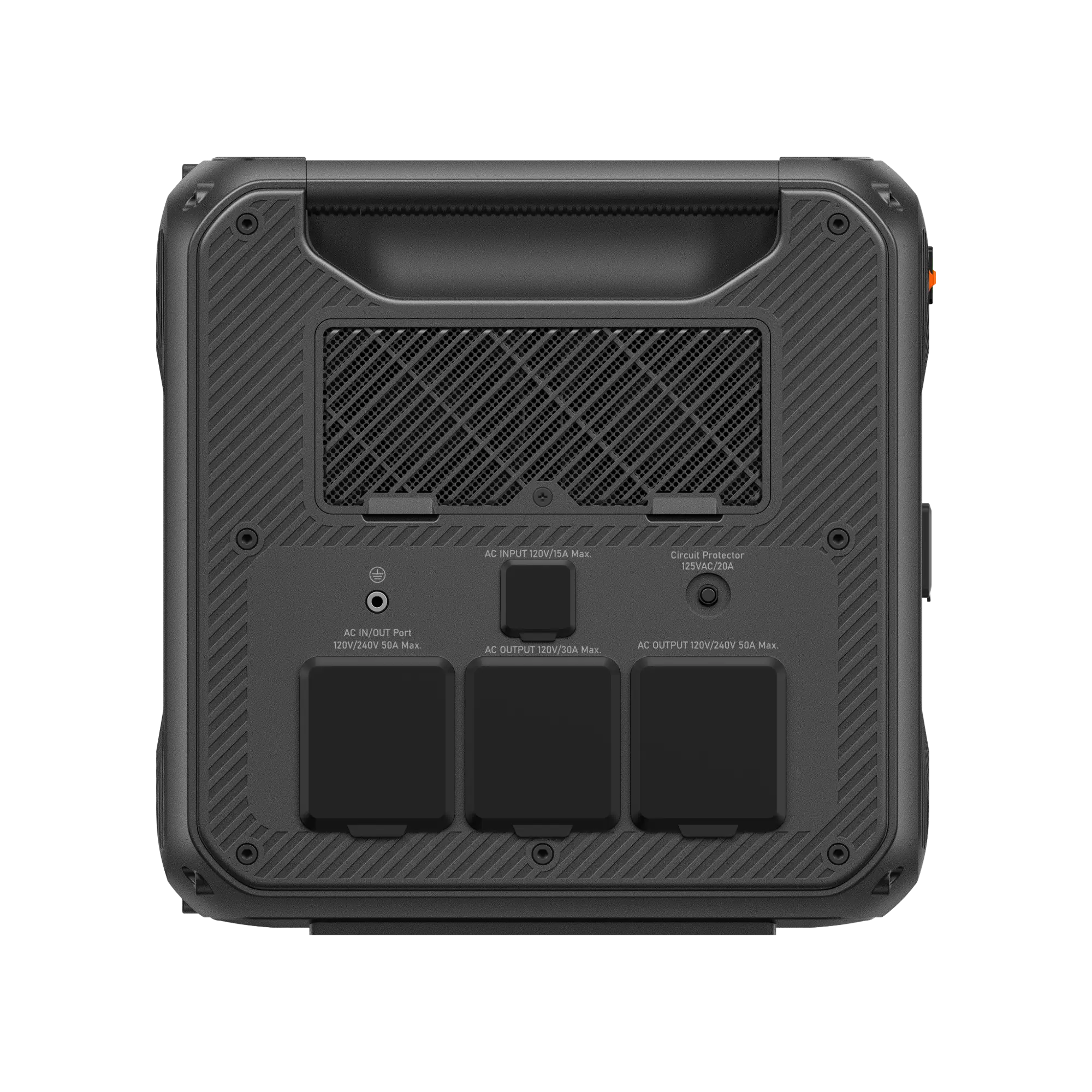
In a home setting, the Elite 300’s 12V/30A DC port and 2,400W output are built to run a refrigerator, Wi-Fi router, and lighting together during an outage. Its TT-30 RV outlet extends that same capacity to a camper or trailer, where appliances typically draw less continuous power than in a house. The 10ms UPS feature is meant to protect always-on electronics, such as security cameras or fish tank pumps, from any gap in power during a switchover.
The Elite 100 V2 suits short trips or grab-and-go situations given its 25lbs weight and 17L size. Its 45-minute charge to 80% makes it practical for topping up between uses rather than planning around a long overnight charge. The Elite 400’s higher 3,840Wh capacity, by comparison, is built for a household running several devices at once rather than just a handful.
- The Elite 30 V2 offers 600W rated power with 1,500W lifting power from a 288Wh capacity.
- The Elite 100 V2 delivers 1,800W of output from 1,024Wh and weighs 25lbs.
- The Elite 300 provides 2,400W of output, 4,800W lifting power, and 3,014Wh of capacity in a body sized like a 2kWh unit.
- The Elite 300 includes a TT-30 RV outlet and a 12V/30A DC port alongside multiple output ports.
- The Elite 400 lists 3,840Wh of capacity with 2,600W of output.
- Fast charging across the lineup includes 1,200W AC TurboBoost on the Elite 100 V2 and 140W PD charging on the Elite 30 V2.
Across weight, output, and charging speed, these budget portable power stations stay smaller and simpler than expandable home battery platforms built around extra packs and hub hardware. That single-box approach runs through the whole lineup, from the smallest carry unit to the Elite 400.
Backup power needs vary widely, and a compact, single-unit option remains a practical choice between portability and household coverage.